
China: Quieter, more fretful than I remember
After four years away, it's time to meet old friends and see what's changed.

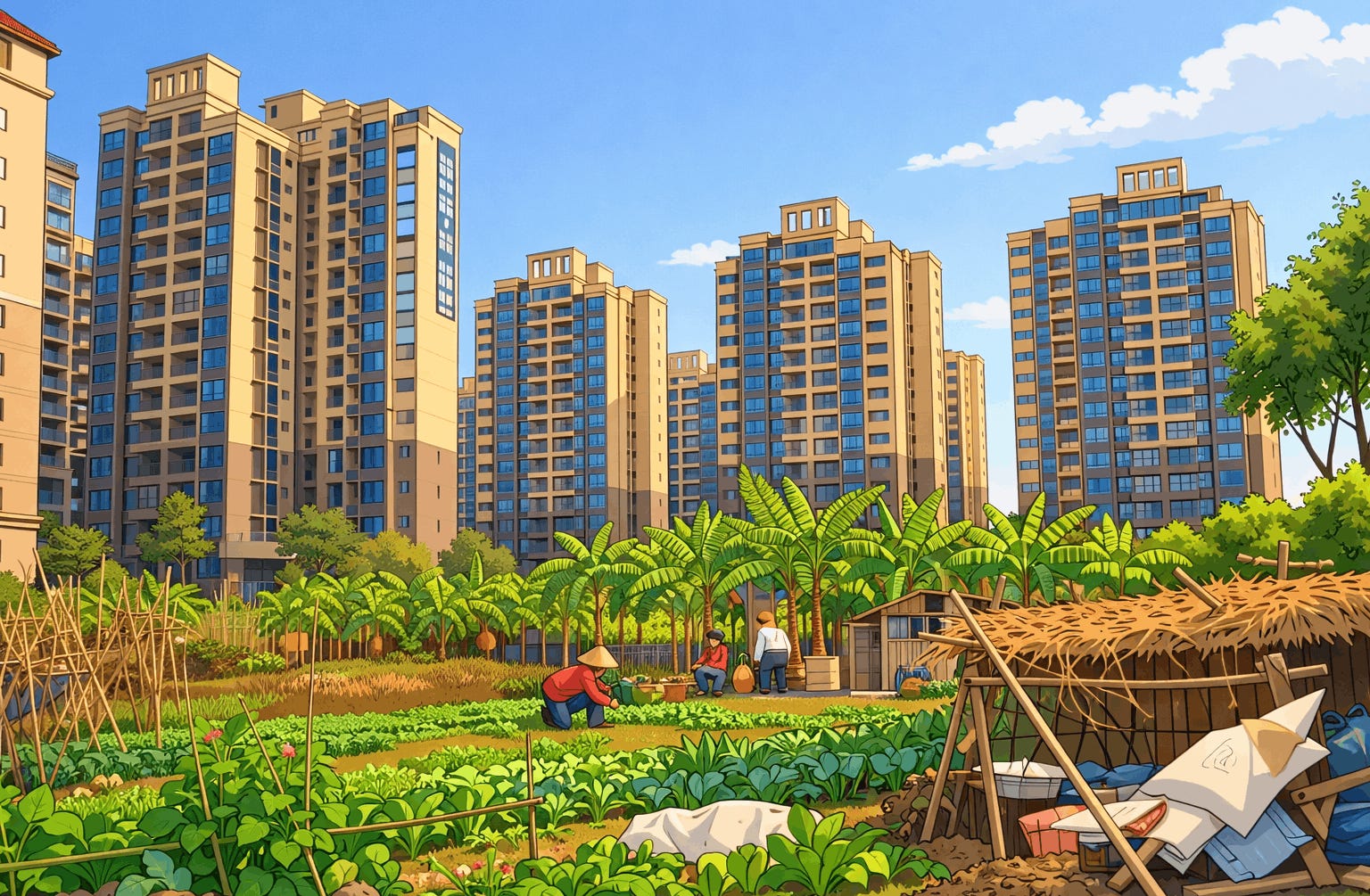
It’s my first day in Beijing, and I’m standing on a busy junction at morning rush hour. Since I was last here, it simultaneously feels like someone has turned the sound down, and the brightness up.
The light is easy to figure — no pollution, no poisonous fug. Just some blue skies. Admittedly, at 62 PM2.5, the city is still 12-times WHO guidelines, yet by Beijing winter standards, the day is pristine. The mountains are clear, and I can read street signs a block away. In January’s past, sometimes I’d even struggle to see buildings across the street.
I rattle a finger in my ear, thinking they are yet to pop from the plane, but no: the city really is this quiet.
Partly it’s electrification. Half of all new car sales in China are electric, now. That’s made a difference, but there’s something else.
Where was the shouting? The deep hocks, and globules of spit onto the pavement? Loudspeakers blurting infuriating ten-second advert loops? Pneumatic drills, and angle grinders screeching through metal? Or the constant, constant honking?
I step into the road and a car actually slows to let me cross — that’s when I realise: has Beijing been tamed?
I’m heading to Dongsi hutong, one of Beijing’s ancient labyrinths, home to former presidents, royal family, the Qing dynasty mint, and at one time: me. I hardly recognise it. The rabbit warren of ramshackle low-slung brick buildings has been smartened up, cleaned, tidied. I walk straight past our old home without realising. In the past, the house was rented to an endless stream of foreigners with more money than sense; who ignored its stinky drains and lack of windows and saw only the authentic, rustic Chinese experience. Today, the yard is strewn with children’s toys. Locals.
Some things haven’t changed though. Nearly all prices are identical to the last time I was here. Salaries, too. Nearby, a bakery hangs a sign seeking a new cashier. They offer ¥3500 a month ($500) plus accommodation, for 12 hours a day, 6 days a week. It’s the same as ten years ago.
A few doors down, another offers ¥4500 ($650) without accommodation, though that one specifies the applicant be ‘under 35 and know the area’. Legally, that’s a naughty no-no. You’re not allowed to specify age in China. But this recruiter obviously feels they can be choosey.
This first hour sets the tone for my week. On the surface, I too get suckered by the quiet civilizing and modern development that has obviously occurred to China since I was last here. I’m a TikTok traveller, wowed and awed.
It’s only when I look closer, scratch, and ask, other stories soon emerge.
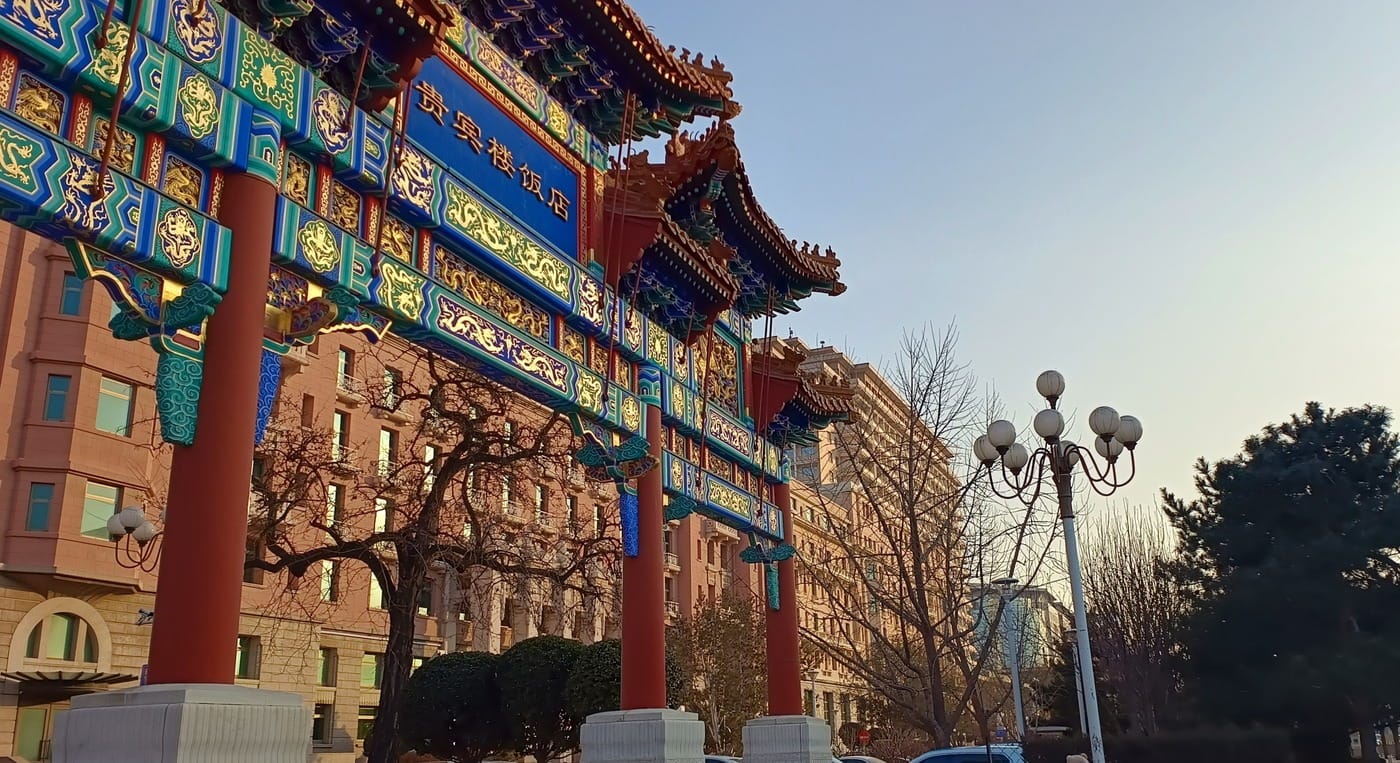
In all, I’m in China nine days. We put together a hectic schedule: Beijing, Hong Kong, Macau, Guangdong and Shanghai. Arrange to talk to1 as many old faces as possible. Listing them now, it’s a varied bunch:
State media (many), marketing, finance regulators, farmers, architects, teachers, interpreters, doctors, social media influencers, coastguard, factory owners, new mums, law administrators, IP sales, Traditional Chinese Medicine doctors, monks, students, Party officials, fresh graduates, product designers, e-commerce website builders, and retired.
It’s a shame the dates didn’t align with my old ragtag football team, else I could’ve added a few more, like: lift installers, bellboys, factory workers, car salesmen, diplomats, and full-time rapscallions.
Ninety percent are Chinese, ten percent foreign. The oldest person I speak to is 95, the youngest is one. The latter is hard to interview.
I’ve got one job for the week. Shut up, and listen.
I find most I speak to are scrabbling in some way. Some are lurching careers. Others are having to suck up pay freezes, or pay cuts. One state worker saw their salary halved — after a promotion too. Many have seen their home values plummet.
Many admit to feeling restless at work, tell me they dream of pursuing something else, particularly opportunities abroad. Many express guilt at this though. They know the job market is currently tough, and there’s a long line waiting to take their position.
Of the younger people I speak to, they estimate about a quarter of their friends are out of work. Weirdly, that lines up almost exactly with the youth unemployment figures — well, until the Government tore up its methodology to make the numbers more acceptable.
“Some are lucky to be fuerdai. Others are just pretending they are fuerdai,” one tells me.
A friend works in the hospitality industry, pitching contracts to large hotel chains. She tells me the downturn is causing personal repercussions.
“Sometimes, I feel like the hotel managers, mostly middle-aged men, are so frustrated with how their jobs are going, they invite us in to give pitches just so they can act the boss and say ‘no’. They have no intention of signing contracts. They just want to feel a sense of power and control, to push some young woman around,” she told me. “I want to quit every day.”
For me, all this talk of economic fragility is very strange. This isn’t the China I remember. In 2016, I landed in a place of — if not boundless optimism, then certainly expectancy. The view was ‘things will always get better’ because things had always gotten better — for all living memory.
When I told people I was essentially an economic migrant, that wages hadn’t risen in the UK since 2009, and I’d moved to China because I was tired of decline, they’d cock their head, look confused.
Now though, there’s an entirely new feeling, one I’ve never felt here before: doubt.
“I used to take my Spring Festival bonus for granted, this year I’m actually working hard to make sure I get it,” one half-jokes.
China’s always been a place of sharp elbows, jostling to stay ahead of the huge competition, but during this week, I feel it more than ever. Conversations quickly turn to get-rich-quick schemes, business ideas, growth industries. I’m quizzed on what sells in the UK, export ideas. In more than one city, people flip open their phones to check investments. Last time I was here, phones were used for bubble popping games and shuffling chickens round digital farms: now it’s stocks, gold, and crypto.
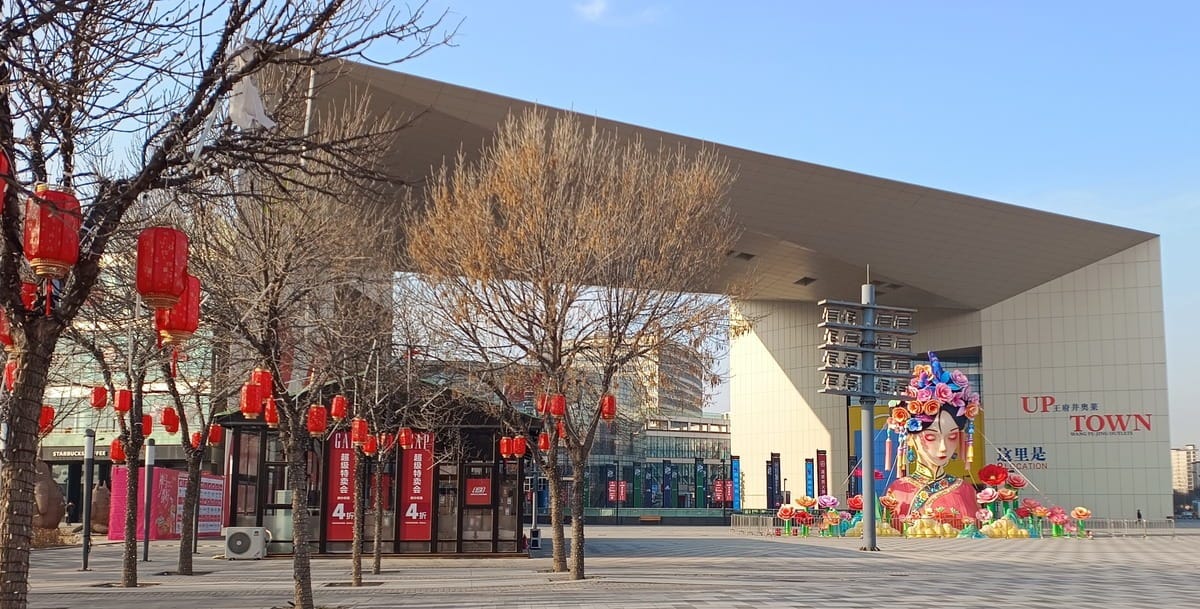
In the south side of Beijing, I stand outside the sparkling new Wangfujing UP TOWN shopping mall. It’s colossal, the largest in the city. Giant posters hang celebrating “Happy 2nd anniversary”, yet the doors are padlocked and it’s mostly abandoned. A plant rots up the inside of a glass staircase. A children’s slide is roped off for maintenance, stuffed with odds and ends.
When I do finally make it inside, I find hardly anywhere open. It’s mainly just food and coffees. Predictably, though, there is one sector flourishing: kid’s education. A multitude of activities. Ice skating, self-defence, computer classes, art and…English? Weren’t these banned?
“They were,” a Chinese friend tells me, later. “But basically, the Government looked at the youth unemployment numbers and panicked. There’s still a huge demand, why not kill two birds with one stone?”
The last time I saw him, he was a marketer for one of the country’s biggest after-school English companies — at least until the Government wiped it out, overnight.
“Initially, we tried to get around the restrictions. Like, we ran escape rooms for children, but all the clues are in English and there is a ‘guide’ in the room to help. The guide is obviously some foreigner from Canada or somewhere,” he says winking.
It didn’t work, the company folded. In the interim, he tried numerous things: social media influencer, importer, he returned to his hometown to sit the civil service exam, until out the blue, an old colleague called. Officials had quietly given the nod, it was time to get the old band back together.
For recruitment, the firm specifically targets graduates in smaller cities known for having multiple universities, and buses them into bigger cities. It’s savvy business. The company charges Beijing and Shanghai parents first-tier fees, while paying second tier salaries to their young Chinese teachers. I look at their faces in photos. They’re practically kids themselves. The firm doesn’t need to negotiate wages, there’s ample takers. His last class had over two hundred trainee tutors. He’s booked through the coming month.
It’s all done on a nod and a wink. The education brand initially had the same name as the parent company — a major well-known firm — but this was deemed too overt. It ‘was suggested’ they rebrand, giving plausible deniability for all. If officials later change their mind, it can be written off as a “small rogue firm”.
That’s the thing with China: there’s ‘rules’, and there’s ‘the rules’. Half of China life is knowing which are which. Half the fun, too.
On the face of it, Qingyuan is a booming small city on the outskirts of Guangzhou. A new high speed metro has brought them even closer than ever, turning it into a commuter town.
Predominantly, it’s famous for its boiled chicken; mention the city to most Chinese people and their mouth will water. But in recent years it’s leaned into tourism, adding a theme park and a glass sky bridge. Its suburbs are spotless, built by China’s huge developers, and adorned with English names like ‘The Nobility’. Some parts feature grand mansions overlooking man-made lakes.
Admit it. You didn’t think China looks like this.
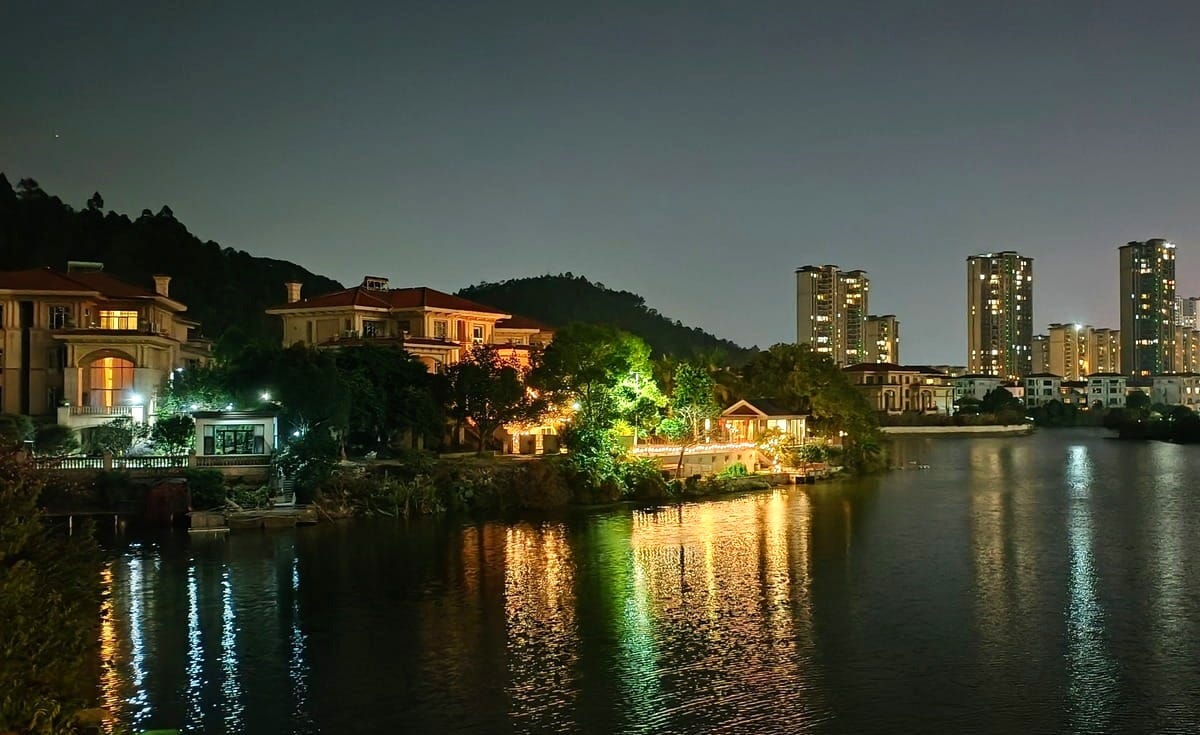
However, for many who moved in early, life has been less a paradise, more a financial headache.
Property prices have toppled since this area was built in the 2010s. Many are under water mortgage-wise, owing more to the bank than they paid. Those who need to sell, have a long wait. One neighbour bought his apartment for around 60 wan ($86,500) nearly a decade ago — it’s currently listed for 36. After months, he’s yet to get an offer.
Developer of the estate Country Garden is wobbling, too. It’s lost money every year since 2022. In 2023, it defaulted on $11 billion of foreign bonds, and in December won approval for one of the largest debt restructurings in Chinese business history. Sales have crashed. It’s not hard to see why.
Like Spain in 2008, China is hitting an infrastructure wall. It’s noticeable most at night. While in the day, the parks downstairs are full of children and young families, teeming with life, come darkness it’s easy to see not all the apartments have lights on. Many are second homes, investments, weekend retreats. Where are all the other buyers?
Walk a kilometre, and you’ll find them on older streets.
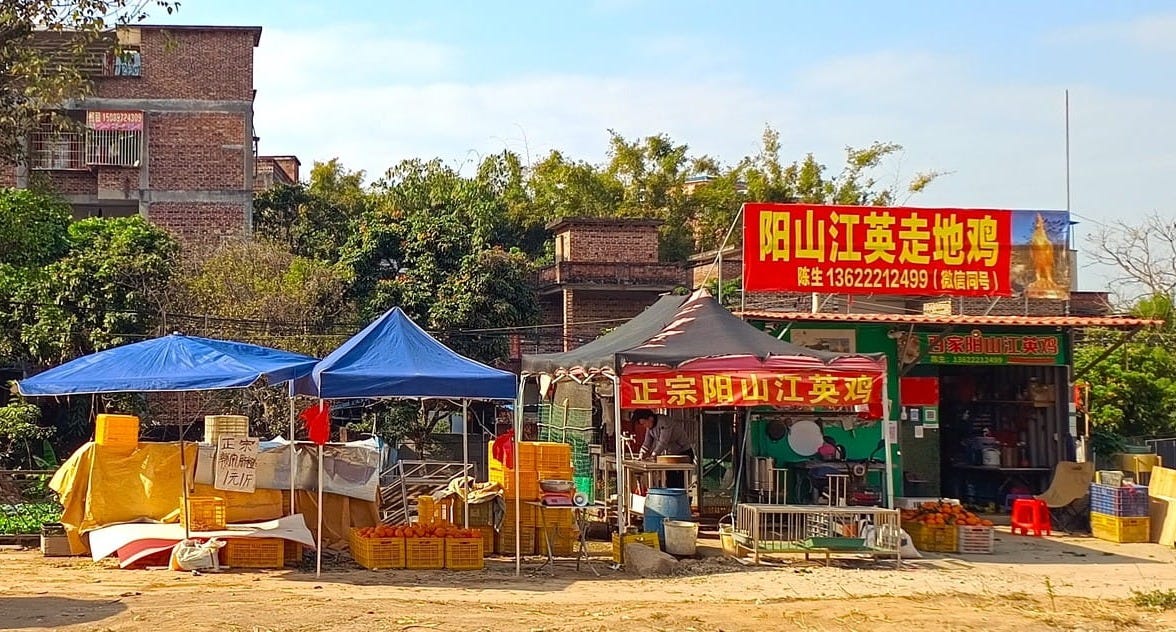
Here, in the shadows of the new developments, and under the bridge of the new metro bridge, locals farm scraps of free land. Bananas. Lettuces. Chives. Nearby, a roadside stall sells oranges at 1 yuan ($0.14) per jin.
Even at today’s knockdown prices, the modern apartments that tower nearby remain out of reach. The stall owner would need to sell 100 oranges, every day, for twenty years. In the last hour, he hasn’t sold one.
Across the week, I deliberately don’t talk politics — I’m a visitor, a guest — but it regularly comes up. I shut up, and listen. I find myself dividing people into three political camps.
The first, and the smallest group I meet are hardened nationalists. Young, energetic, blinkered. Chasing windmills and fighting the fight. They see enemies everywhere, while the Party does no wrong. Most I meet work for state media, and have flourished in recent years.
The next biggest group are “proud” of modern China, active admirers. They span all generations and jobs. Dinner tables are punctuated by trailed Party lines, rolling off people’s tongues. “China has grown strong again.” “No one can stop China’s rise.” The lines are said matter of fact, often to end conversations, for people to sagely nod to.
By far, the largest group I meet, an overwhelming majority, are positively sangfroid. Politics tends not to touch their lives, and they don’t go looking for it. They’re not blind, though. I hear many subversive quips, and see many eye-rolls — some even by Party members, or in juicy state jobs. They see the Government as increasingly paranoid, more self-obsessed than ever, but as long as it is essentially benevolent… meh. So?
As one put vividly put it: “Who cares. Let them wave their big flags, and rub their own titties.”
In Shanghai, a friend asks what I want to do, and I suggest the Memorial Hall of the First National Congress of the Communist Party of China.
“Why?” they laugh. “I’m a Party member and even I don’t want to go there.”
We do, because I am cool, and this is how I want to spend my half day in Shanghai. As we enter, a mass of children wearing school uniforms and identical baseball caps throng past us. My friend shakes their head.
“These poor kids. It’s a Saturday. They should be out playing sports.”
Conclusion
It’s impossible to surmise a country, and absolutely foolhardy to try in just a week. But it’s immediately obvious there is a current vibe in China.
It isn’t frantic. It isn’t charged. It appears to be a collective sigh. Pride at what’s been achieved; acknowledgement that things are going to stop improving at the speed they forever have; resignation that life will be a little bit harder hereon in; and gratitude that there are messier places around the world to live.
Many terms have been thrown at interpreting elements of this current behaviour in China. “Involution”. “Lie Flat”. I’ll add another: “Eh, fine.”
For that’s the phrase I hear most often during the week. How are things, I’d ask old friends. “Ehhh, fine.” When I’d sit in the barber’s chair, or arrive to the guest house, or to the Didi driver, or restaurant, and ask ‘how’s business?’ “Eh, fine.” Occasionally, I’d get a “so-so.”
It’s not the ebullient message the Party continually projects, nor what you’d expect to hear in a country supposedly growing at 5 percent a year. But nor is it the doom of overseas media, reporting mostly from outside.
They say the universe was created in a Big Bang, and will end in the Big Freeze. Everything slowly, just slowing. Perhaps that’s China. As much as it complains, it’d do well to look across the strait at 90’s Japan. Development has caught up. Prices are stuck. The population is falling. Things are eh, fine.
For a Party that sees itself as revolutionary, that measures itself in “Great Leaps” and “New Eras”, this new stasis may be a difficult sell.
From my perspective though, for millions of Chinese, 2026 China society is not a bad landing spot. For its upper classes and new cities, daily life is now commensurate with many European lives, albeit with an important few asterisks around liberty.
Though not all people. A huge rump of China, the majority, lag far behind. Waiters, farmers, factory workers, truckers, cleaners, builders. They hold up the Chinese Dream, but are yet to fully sup from it.
To this, I was mindful my time so far had been wholly city life, among a bubble of mostly privilege. I was keen to experience the ‘other China’.
It was time to head into the countryside~
A few people saw I was in China and asked to meet. Sorry I didn’t ask before, because, frankly, it never occurred to me that anyone would be interested! Hopefully back to China soon. Drop a DM if you’re want to connect and I’ll try to figure something out.
Thanks! Feels like a bit of both. Stressed, but accepting.
Nicely done, looking forward to the next chapter. If I’m not mistaken the “eh, fine” indicates they are more stressed than they would care to talk about? Or is this indeed not like the British “eh, fine”?